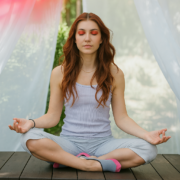
Breath prayer

Why this practice?

Linking breath and short intention activates parasympathetic calming and focus (Spirituality in Clinical Practice).

What is it?

Pairing breath with a phrase or spiritual word.

How to use it

Inhale: think “peace.” Exhale: think “be still.” Repeat for 3–5 breath cycles.

Closing thought

Breathe your intention into being.
Indigenous Australian still listening

Why this practice?

Deep listening, or dadirri, is a form of spiritual and communal attention in Aboriginal tradition. It fosters empathy and clarity (Australian Indigenous HealthInfoNet).

What is it?

A quiet listening practice with no goal.

How to use it

Sit quietly with no distractions. Listen to sounds, feelings, and thoughts. Stay present and open without judgment.

Closing thought

Listening heals what fixing cannot.

Tibetan sky gazing

Why this practice?

Sky gazing, from Dzogchen meditation, trains open awareness and mental spaciousness. It reduces overthinking and supports relaxation (Consciousness and Cognition).

What is it?

A visual meditation using the open sky as an anchor.

How to use it

Lie or sit outside with a view of the sky. Gaze softly without focusing. Let your mind expand with the sky.

Closing thought

The sky doesn’t hold thoughts. You don’t have to either.

Andean coca gratitude

Why this practice?

Coca leaf rituals in Andean culture honour reciprocity and balance. Gratitude rituals improve resilience and social connection (Journal of Ritual Studies).

What is it?

A symbolic offering or silent gratitude practice.

How to use it

Hold a leaf or a symbol. Say: “Thank you” aloud or in silence. Breathe once for what you give, once for what you receive.

Closing thought

When you give thanks, you hold the whole in your hands.

Taoist walking stillness

Why this practice?

Taoist walking cultivates balance, inner quiet and flow. Slow movement practices improve mental clarity (Asian Journal of Sport and Exercise Psychology).

What is it?

A meditative walk with deep awareness.

How to use it

Walk slowly for 5–10 minutes. Focus on each footstep and breath. Let your body lead your mind.

Closing thought

You can move and still be still. That’s the paradox of peace.

Sufi heart remembrance

Why this practice?

Sufi dhikr, or remembrance, calms the heart and strengthens emotional presence. Repetitive sound practices can lower heart rate and induce calm (Journal of Religion and Health).

What is it?

A heart-focused repetition of a calming word or phrase.

How to use it

Sit quietly. Place your hand on your heart. Repeat silently: “Peace” or “Love.” Breathe slowly with each repetition.

Closing thought

The heart listens to rhythm more than noise. Give it something soft to hear.

Pachamama gratitude

Why this practice?

Giving thanks to Pachamama, Mother Earth, builds a connection to place and self. Gratitude enhances mood and perspective (Ecopsychology Journal).

What is it?

A spoken or silent thank-you to the ground beneath you.

How to use it

Stand barefoot outside. Say: “Thank you for holding me.” Touch the earth and feel its support.

Closing thought

Gratitude grows roots. Let yourself belong.

Metta moment (loving-kindness)

Why this practice?

Loving-kindness meditation improves emotional regulation, increases empathy and compassion, and reduces anxiety (Frontiers in Psychology).

What is it?

A short practice of mentally sending kind wishes to yourself and others.

How to use it

Close your eyes and breathe. Say silently: “May I be happy. May I be safe.” Think of someone else and repeat: “May you be happy. May you be safe.”

Closing thought

A few words of love, repeated daily, can soften your whole life.

Yoga Nidra power pause

Why this practice?

Yoga Nidra, or yogic sleep, provides deep rest and a reset for the nervous system. It improves sleep and lowers stress (International Journal of Yoga).

What is it?

A guided body-scan meditation while lying down.

How to use it

Lie flat with eyes closed. Play a 10–15 minute Yoga Nidra audio. Let your awareness follow the voice.

Closing thought

Stillness is not absence; it’s restoration.

Puzzle meditation

Why this practice?

Working with your hands on simple puzzles improves focus and reduces stress by engaging the brain’s problem-solving networks while calming the body.

What is it?

Using a small jigsaw, a crossword, or a logic puzzle as a meditative tool.

How to use it

Choose a puzzle that’s enjoyable but not frustrating.

Work for 10–15 minutes without pressure.

Focus only on shape, pattern, or clues, not time.

Closing thought

Solving doesn’t always mean fixing. It can simply mean being absorbed.