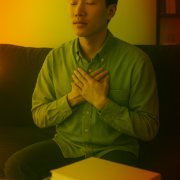
Emotional waves awareness

Why this practice?

Recognising that emotions rise and fall like waves helps reduce over-identification with them. This awareness increases self-regulation and reduces reactivity (Psychological Science).

What is it?

A mindful framing practice: “This is a wave. I can ride it.”

How to use it

When a strong emotion arises, pause. Name it: “This is anger,” “This is sadness.” Say to yourself: “This will pass. I can breathe through it.”

Closing thought

Feelings are not forever. They’re visitors, let them move through.

Touch something natural

Why this practice?

Physical connection to nature — even briefly — reduces cortisol and improves emotional regulation. Touch is a direct route to grounding ().

What is it?

Touching natural elements like wood, leaves, stones, or water is a grounding practice.

How to use it

Go outside or bring a natural item indoors.

Hold it in your hand, feel its texture and weight.

Breathe slowly as you engage your sense of touch.

Closing thought

Nature offers contact, not just scenery. Reach out and return to yourself.

Emotion naming

Why this practice?

Labelling emotions helps reduce their intensity. Neuroscience shows that naming what we feel calms the amygdala and improves emotional regulation.

What is it?

A quick self-check to identify and name what you’re feeling.

How to use it

Pause and breathe.

Ask: “What am I feeling right now?”

Use specific words (not just ‘good’ or ‘bad’).

Closing thought

When you can name it, you can hold it more gently. Words create space for care.

Write to your future self

Why this practice?

Writing to your future self enhances motivation, self-regulation and purpose. It’s often used in therapy and coaching to boost personal growth.

What is it?

A reflective letter from your current self to a future version: 1 month, 1 year, or 5 years ahead.

How to use it

Choose a future time point.

Write freely: share hopes, advice, encouragement.

Store it digitally or on paper to revisit later.

Closing thought

You are always becoming. Your future self will thank you for today.

Breath before react

Why this practice?

A single conscious breath helps regulate the nervous system. Research in behavioural science confirms it reduces impulsivity and increases emotional control ().

What is it?

A pause before responding, to people, messages, stress.

How to use it

Notice a trigger or urge to react.

Inhale slowly through your nose.

Exhale slowly through your mouth.

Respond only after this pause.

Closing thought

Between impulse and action lies power. One breath can change everything.

Say it aloud

Why this practice?

Verbalising thoughts helps clarify emotions and reduce inner tension. It’s a technique used in cognitive therapy to build awareness and self-regulation ().

What is it?

Speaking your thoughts or emotions out loud to name and process them.

How to use it

Find a private moment.

Say out loud what you’re feeling, thinking or needing.

Speak with kindness, as if talking to a friend.

Closing thought

When you name it, you tame it. Your voice can be your anchor.

The digital-free morning

Why this practice?

Avoiding screens in the first hour after waking supports clearer thinking and better mood regulation. Research links early screen use to increased stress and reduced focus.

What is it?

A morning routine free of emails, news or social media.

How to use it

Avoid looking at your phone for at least 30–60 minutes after waking.

Replace with a non-digital activity: shower, read, stretch, journal.

Use an alarm clock instead of your phone if needed.

Closing thought

How you start your day sets the tone. Begin with intention, not interruption.

One shelf declutter

Why this practice?

Clutter contributes to anxiety and reduces mental clarity. A single tidy-up can improve your sense of control and focus.

What is it?

Tidying up a small area in your home: one shelf, drawer, or surface.

How to use it

Pick a small, defined space.

Remove what doesn’t belong or isn’t useful.

Wipe it down and return only the essentials.

Closing thought

Order in your space creates order in your mind. A small shift can change your whole day.

The weekly body scan

Why this practice?

The body scan, a core technique in mindfulness-based interventions, helps us tune into physical sensations and uncover stress signals early. Clinical trials show it enhances body awareness and emotional regulation ().

What is it?

A guided or silent mental sweep through your body, noticing sensations without judgement.

How to use it

Lie down or sit comfortably.

Close your eyes and bring attention to your feet.

Slowly scan upwards: legs, hips, torso, shoulders, arms, neck, head.

Observe without changing anything.

End with a deep breath.

Closing thought

You carry your stress in your body. Noticing it is the first step toward releasing it.

Box breathing (4-4-4-4)

Why this practice?

Box breathing, used by Navy SEALs and therapists alike, is shown to balance the autonomic nervous system and reduce anxiety.

What is it?

A breathing pattern that consists of four equal parts: inhale, hold, exhale, hold.

How to use it

Inhale through your nose for 4 seconds.

Hold your breath for 4 seconds.

Exhale slowly for 4 seconds.

Hold again for 4 seconds.

Repeat for 3–5 minutes.

Closing thought

This square of breath builds calm. It’s a reliable reset for your nervous system, anytime, anywhere.